
Map of refugee route
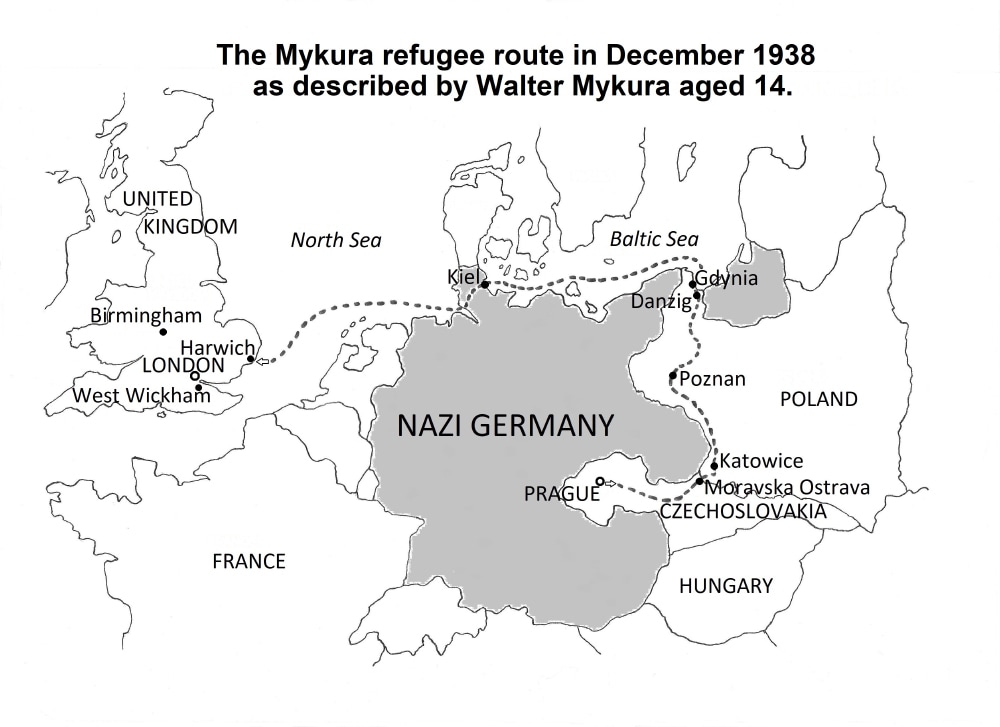
Sudetenland Map

Austro- Hungary stretched from Krakow to Pola

Map of place names with pre-WW2 German language equivalents

‘Prague’ in English is ‘Praha’ in Czech, or ‘Prag’ in German. After the trauma of World War Two the maps and town signs of Czechoslovakia removed the German language names in favour of the Czech names. Examples are given below. German-speaking Czech citizens were driven out of Czechoslovakia from 1945.
Falkenau was the small town where the Mykura family lived at Lobsweg 28. It was about 100 miles west of Prague. Falkenau became Sokolov after World War Two.
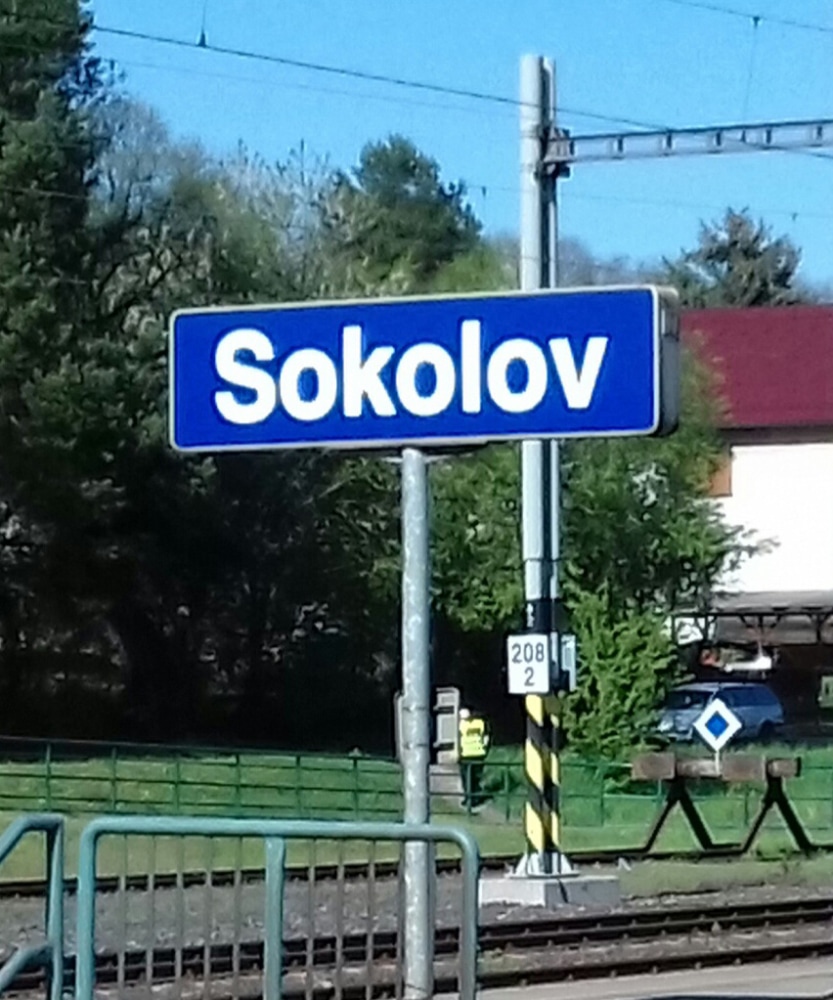
The image is Sokolov train station in 2018. Franziska wrote about her home town of Falkeanu (now Sokolov.)
“In the years following the war (World War One) the coalmines and the industries were fully occupied. In our town a big chemical factory was built. This town had an open-cast coal -mine and my father got work on the enlarged railway line.”
Eger was where Franz Mykura went to school and did his apprenticeship in a metalwork factory. Eger became Cheb.

Schmiedeberg was where Franziska Mykura was born. Schmiedeberg became Kovarska.
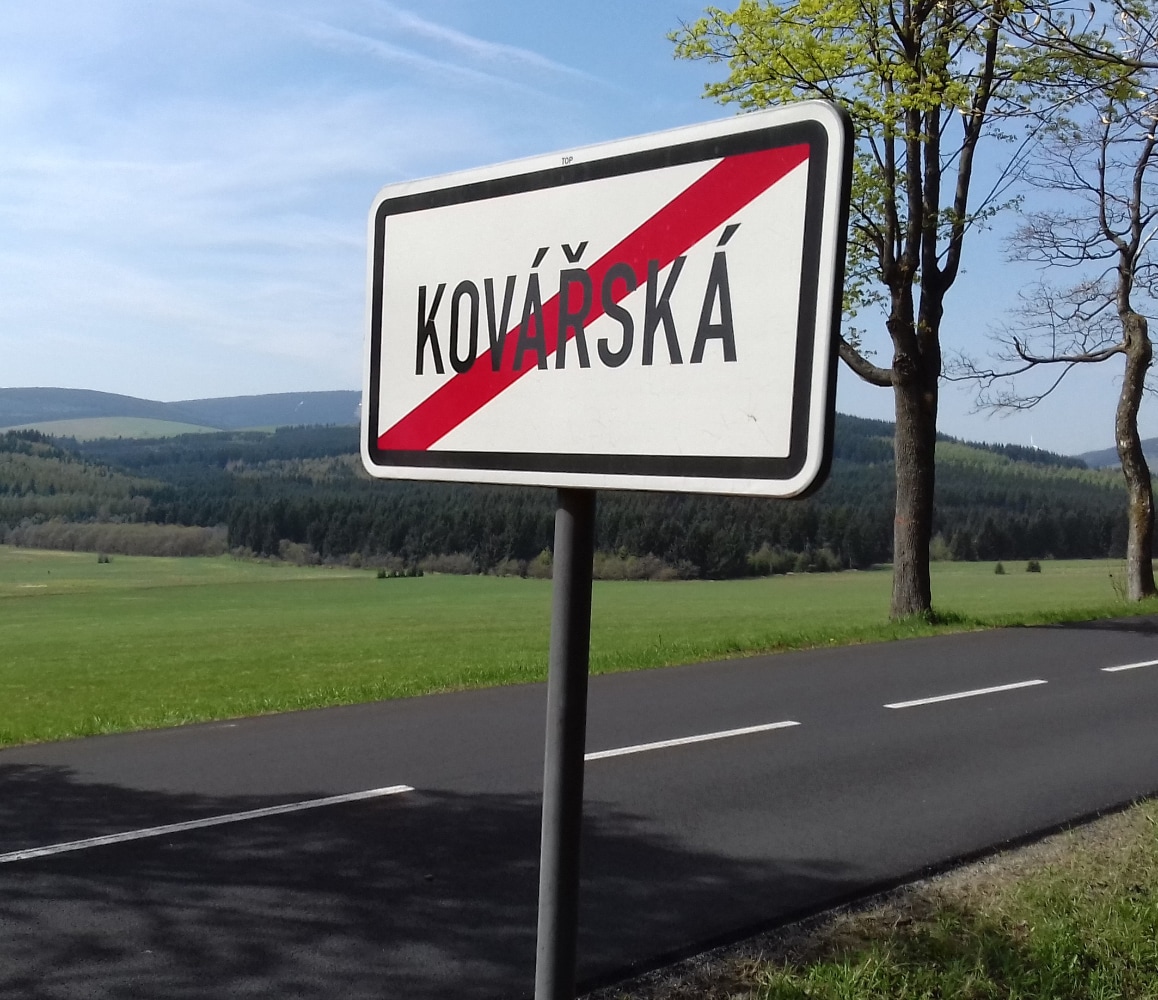
Franziska wrote about the Schmiedeberg (now Kovarska) of her childhood:
“The village where I was born lies in the ‘Ore Mountains’ ‘Erzegebirge’ in Bohemia. Bohemia was at that time in the Hungarian- Austrian Empire.
The summers there were lovely. The village was just one long street, most of the cottages standing by itself with its own well, the stable for the cow inside the cottage, big pile of firewood out side. Round the green fields on all sides were the large pine forest, Whether I helped with the hay-making, or went with my cousins gathering berries and mushrooms in the forest, I enjoyed the strong mountain air and the intensive sunshine tremendously!
But the winters had the bigger surprise. In the town where we lived we often had a foot or two of snow. These towns had a sea level of 450 m. The villages where we came from had a sea level of 940m. Coming up there and losing the road in the darkness we had to struggle in perhaps three feet or more of snow. All my cousins had home made skis and sledge. Skis were more a necessity than a sport at that time. They were used in going to school. To go to the next village in skis were much quicker than walking in summer. When I started school I still spoke the dialect of the mountains. With time I learnt the dialect of the lowlands.”
With the rise of industry in the towns it was no wonder that lots of young people left their village and found work in the textile industry and coal mines. Some went over the border to Germany.
My parents also left their village when I was a small child and settled in a town 50km away.”
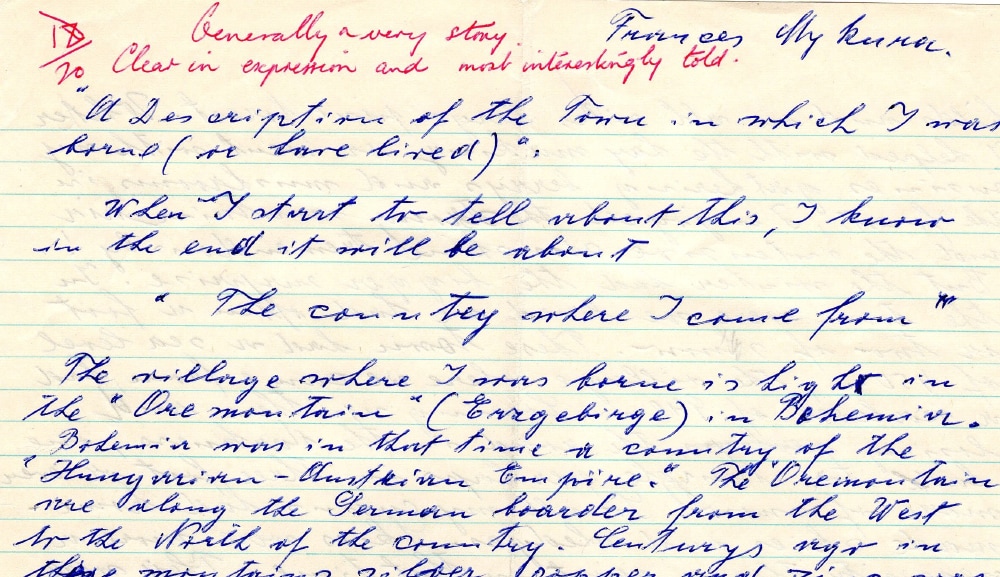
The image is ‘A description of the town in which I was born …… which was an undated essay written for her English lessons, describing the village of Schmiedeberg (now Kovarska) where she was born. The teacher has written in red ink on the essay.
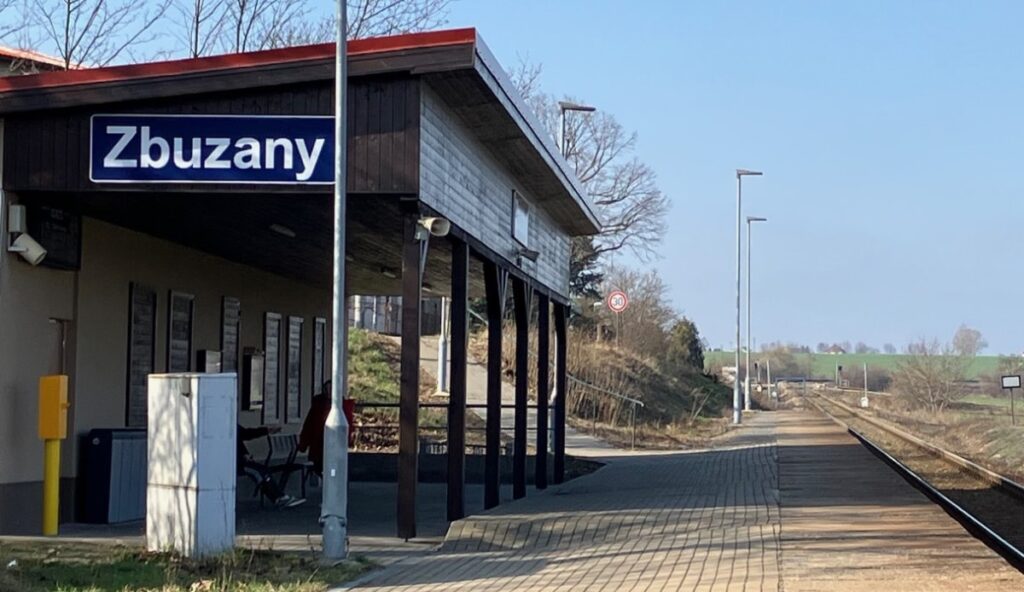
The small village of Zbuzany was the first stopping place for the refugee Mykuras who left their home town in the Sudetenland on 22nd September 1938. This was a week before the Munich Agreement. The village of Zbuzany was already known to twelve year old Walter Mykura, who had been on an exchange there with a Czech boy. Zbuzany was also conveniently close to Prague by rail, as it is today. The photo is by one of Franz and Franziska’s grandchildren. See Key Document One for a description of the village by Franziska Mykura