
Death of Siblings of both Franziska and Franz
Ernst Bartl, a German soldier, was killed 1940.
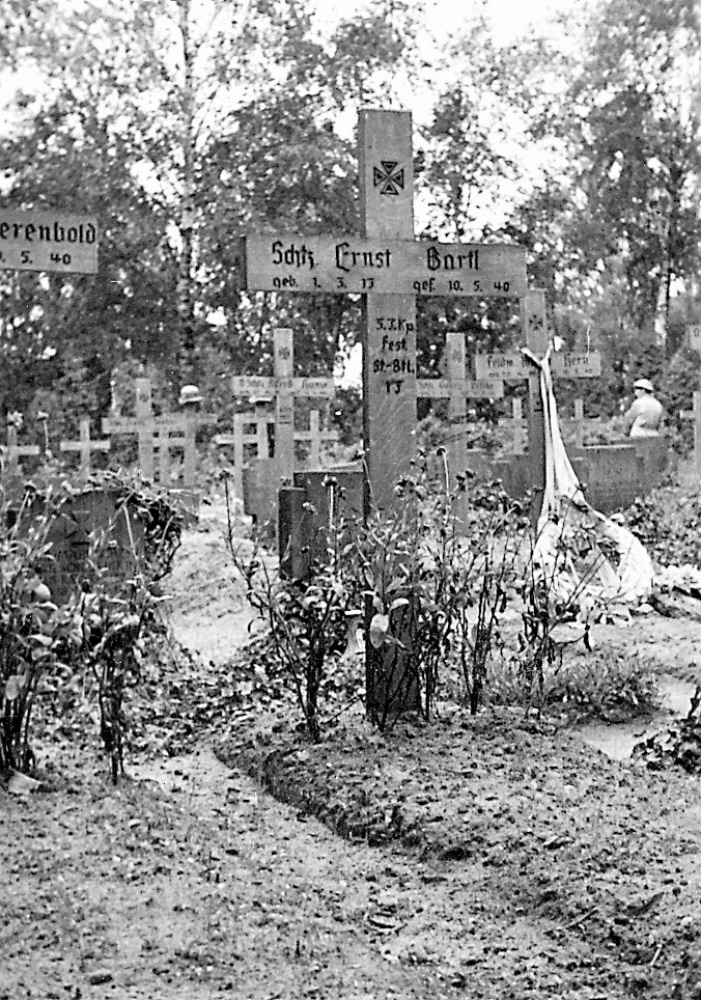
Ernst Bartl (1913-1940) was the youngest brother of Franziska Mykura. He was killed aged about 27 on 10th May 1940, the first day of the German army’s attack on France, the Battle of France. His body was buried in a new grave, amongst older graves, at Zweibrücken military cemetery in Germany. Ernst’s history is unknown, where he lived or what his job was before the war. Ernst’s name had last appeared in the Mykura UK archive on the back of a 1925 wedding photo of Franziska and Franz, dedicated to twelve year old “Unseren Ernst” (Our Ernst.) Ernst Bartl was the youngest of five children. When he was killed he left two children of his own.
Hans (Johann) Mykura, the older brother of Franz Mykura died on 14th January 1941 aged 46 in Falkenau. It is not known why Hans died, or what his circumstances were. The only other mention of Johann in the Mykura UK Family Archive is his inclusion in the family tree.
Death of nephew of Franz Mykura
Ernst Pöpperl, a German soldier, was sadly lost (missing) at the Battle of Stalingrad (1942-1943). Ernst left a daughter. This information is reported in a letter to Walter Mykura and his wife in 1957 from Franz Mykura’s three surviving sisters who lived in Germany. See a photo of Ernst Pöpperl as a child in 1927 in Falkenau with his brother Franz Pöpperl and his two Mykura cousins, Helmut and Walter. After Ernst’s death the three surviving cousins remained in contact through the rest of their lives. See link to Further Memories section in 1990 ‘Franz Pöpperl in Jachymov, Czech Republic, to Helmut Mykura
Franz Mykura was passed as a Czech Refugee in 1940
“Permission was granted for employment with the Harold Andrews Grinding Company Limited.” HAGCO.
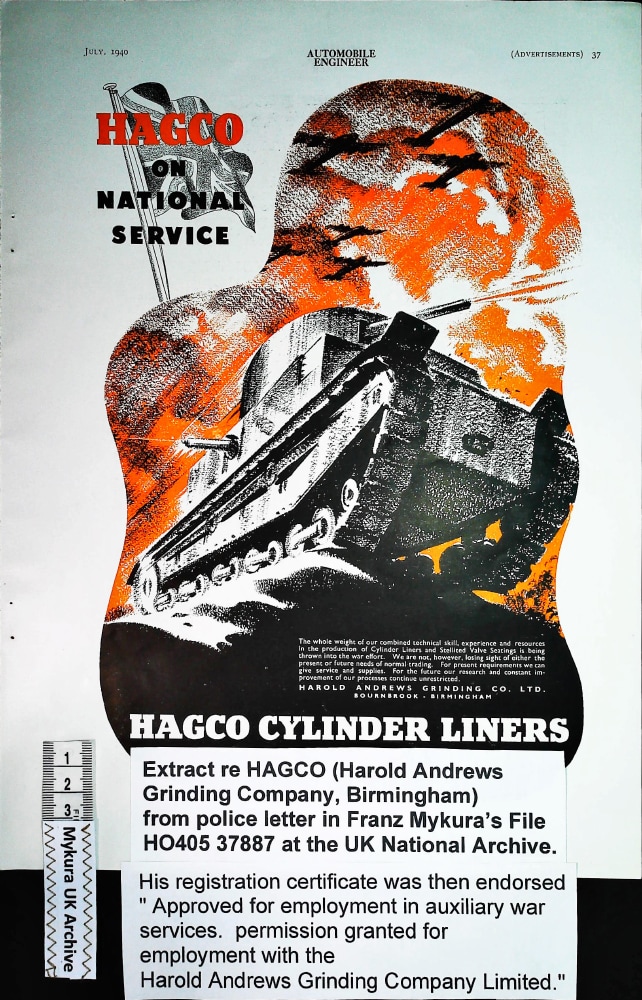
The HAGCO factory advert is from the July 1940 issue of the magazine ‘Automobile Engineer.’ Until 1940 Franz had not been allowed to work. On the 11th August 1939 his permission to stay was extended for another six months until 31st January 1940. A couple of weeks before that deadline, “In 1940 he appeared before a Czech Tribunal and was passed as a Czech refugee as contained in the terms of a memorandum reference H.O. Gen. 202/9/16 dated 19th January 1940.” His registration certificate was then endorsed “Approved for employment in auxiliary war services. Permission granted for employment with the Harold Andrews Grinding Company Limited.”
Franz continued his job as a metal-worker in the factory of the Harold Andrews Grinding Company (HAGCO) in Birmingham until he retired. Harold Andrews, who was the company Director of HAGCO, was a referee for Franz’s UK naturalisation (citizenship) application in 1949.
Franziska Mykura was passed as a Czech Refugee in 1940
Franziska was permitted to accept domestic employment before the 1940 decision.

Until 4th November 1939 Franziska had not been allowed to work. In a letter from the Home Office dated ref AR.5E. M.14863/2 the Secretary of State did not raise any objection to her stay in the United Kingdom and Franziska was permitted to accept domestic employment. On the same day as her husband, she appeared before a Czech Tribunal as described in Home Office letter Gen.202/9/16 of 19th January 1940.
Franziska did domestic work locally in Birmingham. Franziska’s daughter Eleanor remembers going with her mother to her mother’s employer’s home to watch the coronation of Queen Elizabeth on BBC television in 1953, a time when most people did not have a TV.
A baby daughter born in 1941
Eleanor Mykura was the third child of Franz and Franziska Mykura

Translation: Comrade Franz Mykura is pleased to inform us that his wife has given birth to a daughter.
The birth notice was in Die Brücke, which became the newsletter of the Seliger Gemeinde, the post-war successor organisation of Franz and Franziska’s political party in pre-war Czechoslovakia. A war-time baby, Eleanor was born in Birmingham, UK on 24th March 1941.
Evacuation of children in wartime Birmingham
Three Czech refugee boys, Lou Ullmann, Walter Mykura and Helmut Mykura joined Yardley Grammar School in spring 1939, before war started.
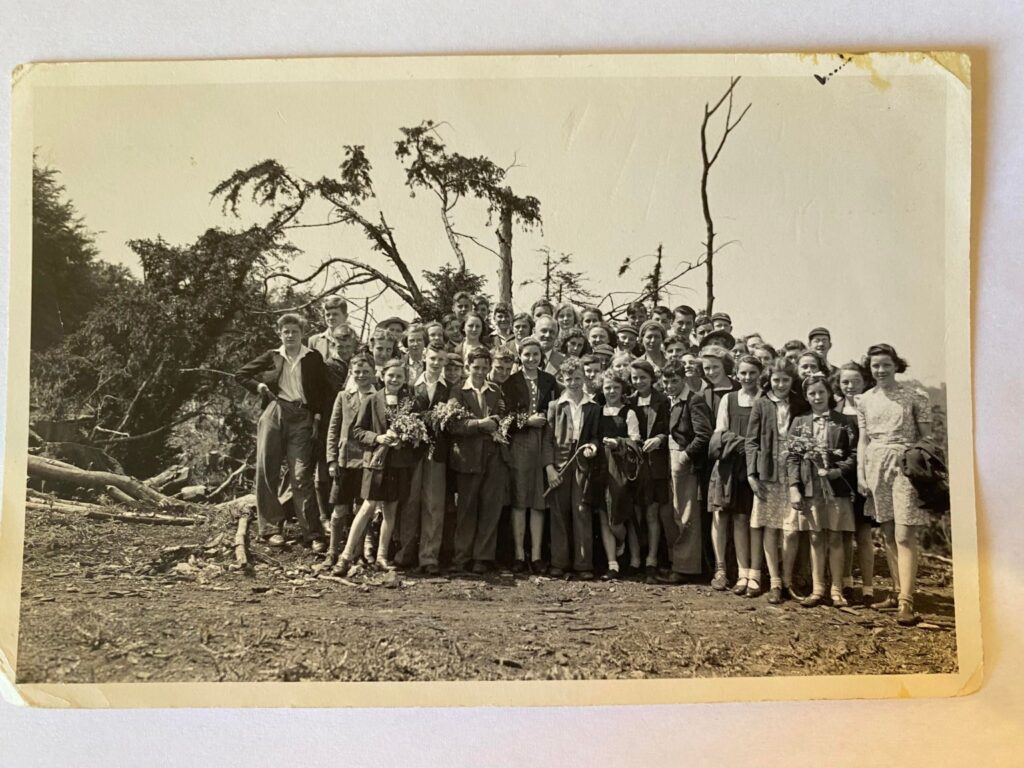
Thank you to the Ullman family for permission to use this image of about fifty children and five adults from Yardley Grammar School in Birmingham. They were evacuated with some of their teachers to Lydney. The location and date of this photo is not known. In this image Lou Ullmann is the tall boy on the left. The boy second on the left is likely to be Walter Mykura. The boy in the back row, centre-left with hair flopping forward on one side and his face partially obscured, is likely to be Helmut Mykura.
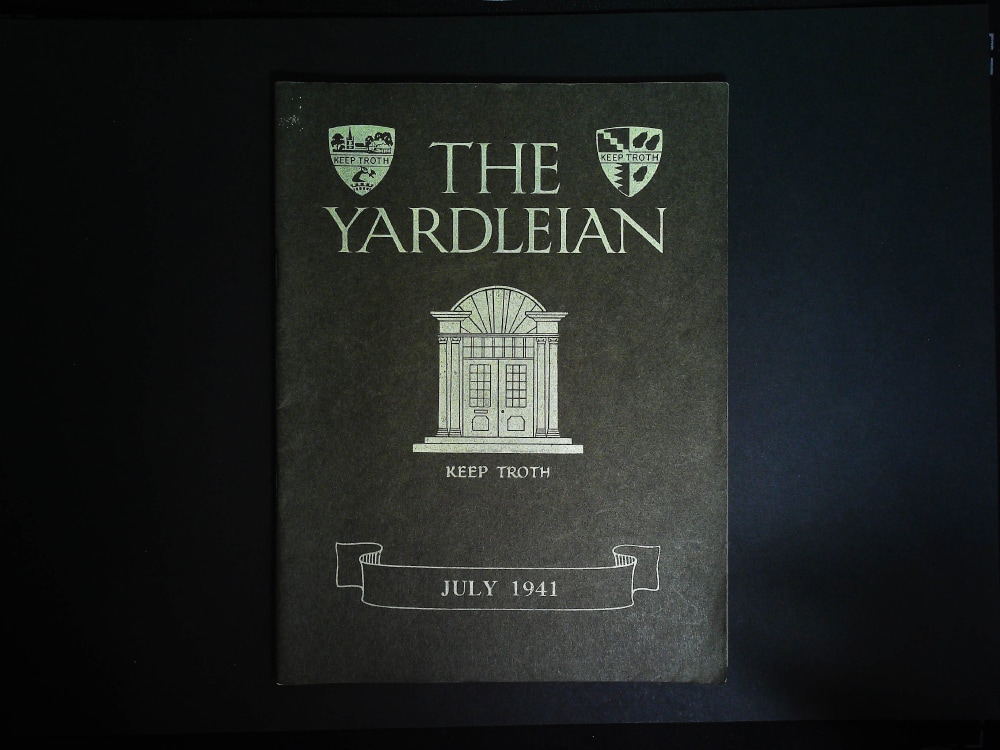
The information about wartime evacuation is from the School magazine the Yardleian.
The first evacuation: Nearly 400 children at Yardley Grammar School in Birmingham, were evacuated at the start of the war in September 1939. The idea was to move urban children away from cities that might be bombed. “In Lydney the war seems far away,” explains the school magazine ‘The Yardleian.’ The children and staff went by train to Lydney in Gloucestershire, a small town about 60 miles south-west of Birmingham. By the end of 1939 children drifted back to Birmingham because there had been little bombing yet in the ‘phoney war,’ but more than 100 were still evacuated in Lydney by July 1940. The school magazine reports that in July 1940 both Walter Mykura and Helmut Mykura took part in swimming races at the Lydney open air pool.
The second evacuation: The Battle of Britain saw a series of air raids in Birmingham from August 1940 which worsened during the year. About 130 children from Yardley Grammar School went to Lydney on November 26th 1940. With no water at Yardley Grammar School and a hole in the roof another group of 27 children went to Lydney on December 3rd 1940. A week later in December 11th 1940 the school in Warwick Road was seriously damaged in a long air-raid or ‘blitz.’ Many of the children in Lydney stayed there for the Christmas holidays in 1940.
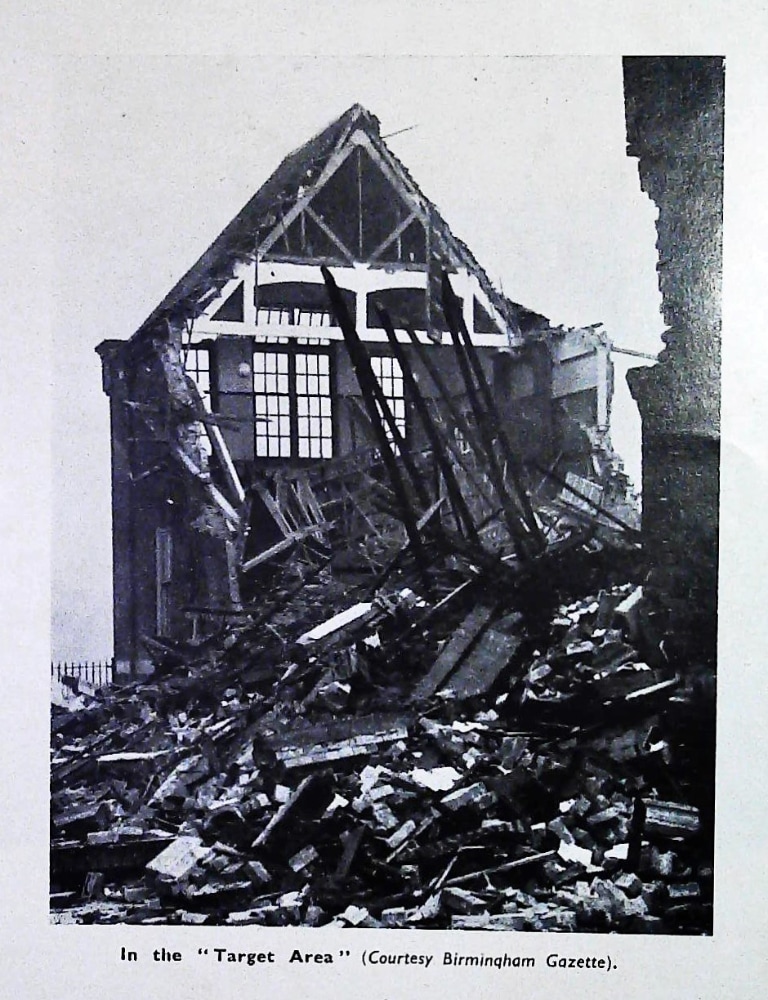
The bomb damage photo, is from the July 1941 school magazine ‘The Yardleian.’ The school magazine came out once a year in war-time and reported on the previous year’s events. By the end of the summer term in 1942 about seventy evacuee pupils were left in Lydney, as bombing had waned. In summer 1943 only seventeen pupils from Yardley Grammar School remained at Lydney. After that the school was ‘re-united after evacuation” on the Birmingham site for the rest of the war.
Wartime schooling described in the school magazine “The Yardleian.”
The three Czech boys responded with enthusiasm to good experiences at Yardley Grammar School in Birmingham UK.
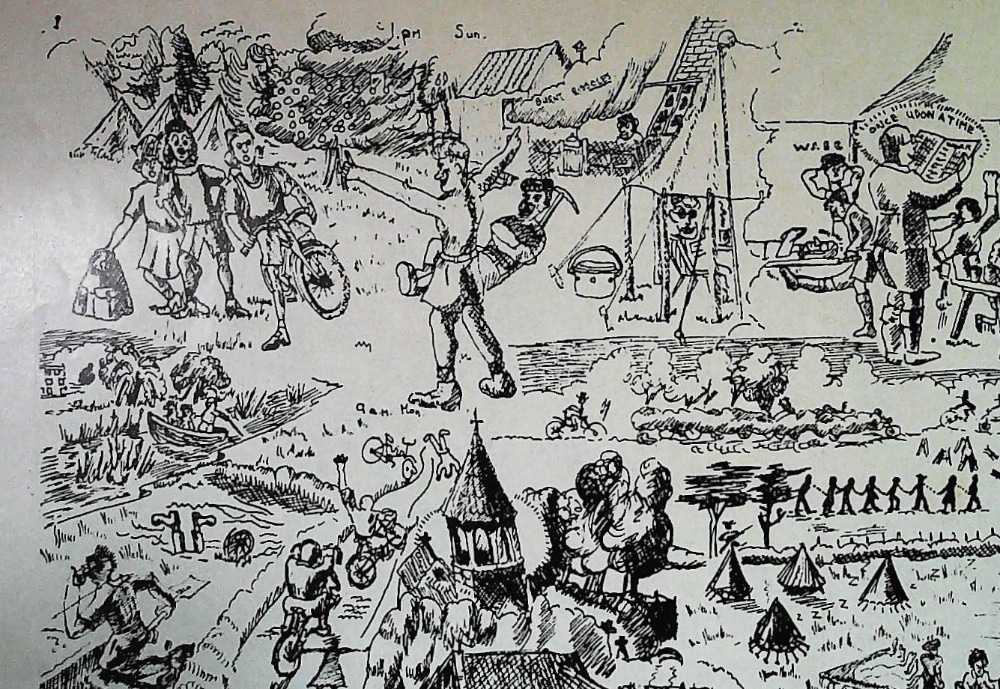
The cartoon from the Yardleian School Magazine shows an annual war-time school harvest camp at the village of Wasperton in Warwickshire.
Fire-watching (in case of bombing) at Lydney School was undertaken by evacuated pupils on a rota sleeping overnight at the school. It was seen as “important and serious” but “it does not prevent the Yardelians enjoying themselves on fire-watching nights.”
‘The Great Dictator,’ the Charlie Chaplin film satire on Hitler and Nazism was released in the UK in December 1940. At Lydney picture house in the spring term of 1941 all the evacuee pupils were taken to see the film.
School class prizes were won at the end of 1941, by both Walter Mykura and Lou Ullmann.
“War Weapons Week” in May 1942 saw the school’s War Savings Group collect £45 15 shillings.
The Russian Red Cross was presented with £16 and 5 shillings at Easter 1942.
War work was offered to pupils during Easter holidays 1942. The choice was either farming work or factory work.
School Certificate (a national qualification in English schools) was gained in 1942 by the three Czech boys A. Ullman, W. Mykura and H Mykura. The three also gained subject prizes, A. Ullmann won History and Latin, W. Mykura won Science and H. Mykura won Mathematics.
The ‘Ship Adoption Society’ at the school sent ten parcels during 1942 containing knitted goods and books to two merchant ships.
A ‘Cadet Unit’ was formed In 1942 at Yardley Grammar School to give ‘elementary military training.’ During the war eighty boys took part, including the three Czech boys. Interest waned as the European threat reduced and in 1945 the Unit was ‘standing down.’
Agricultural camps at Wasperton were organised by the school and supervised by school staff. The biggest camps were the Harvest Camps which took place in 1941, 1942, 1943, 1944 and 1945. The cartoon image is from ‘The Yardleian’ school magazine of July 1943. These work camps were paid and could also be described as a camping holiday. For example 61 boys and 54 girls attended in 1942. The 1943 harvest camp at Wasperton was mainly potato picking, but also beans, threshing and fruit picking. “There were a few of us who were staying on for six weeks and had to return to Birmingham for a fresh change of clothes and a civilised meal or two. On the way back Helmut Mykura and I called in at Jims’ Café for a snack.” The 1944 harvest camp at Wasperton was mainly potato picking but also “stooking, carting and pitching on to the rick.” Over five weeks of camp 12,000 hours of work was done at twenty-one farms by 117 pupils The farmers paid £415 for this work. There were additional ‘Spring Camps’ eg 1943 the Spring Camp report was written by ‘H. M’ (Helmut Mykura) and described three-weeks work of potato planting and muck-spreading by 27 boys supervised by staff. The 1944 Spring Camp report described ‘Helmut Mykura arriving with his usual hungry look.’ Again ‘potato planting’ was done.
Youth Hostelling and cycling weekends took place in 1943 and 1944. In 1944 Helmut Mykura was secretary of the school Youth Hostelling group.
Geology interested Walter Mykura who gave a school talk on the ‘Evolution of the Horse and Elephant’ in 1943. The school scientific society had an excursion to Birmingham University Geological Museum in February 1943. This museum archive now holds samples of Walter’s geology undergraduate work in the late 1940s. In 1944 “an interesting lecture on World Supplies of Oil” was given at the school by W. Mykura. The lecture was “illustrated by epidiascope pictures.” At Easter 1943 a school geology trip went to Derbyshire. At Easter 1944 a group went on a school geology trip to Llangollen in Wales.
“Lidice” a poem about the Nazi massacre in June 1942 of the villagers in Lidice in Czechoslovakia was printed in the school magazine The Yardleian in 1944.
Sports were played by both Walter and Helmut including the new team sports for them, rugby and cricket. Both brothers were in the school rugby First XV team.
‘Higher School Certificates’ (an English national exam) was gained in 1944 by the three Czech boys, A. Ullmann, W. Mykura and H. Mykura, who had joined the school five years earlier in 1939. All three later went on to study at Birmingham University.
The Czechoslovakian Red Cross took 1,064 items of clothing collected at school in 1945. The prefects had responded to the headteacher’s appeal for clothing to be sent to occupied countries by deciding to send them to Czechoslovakia.
Helmut Mykura at Birmingham University
Aged seventeen he studied physics from 1944-47.
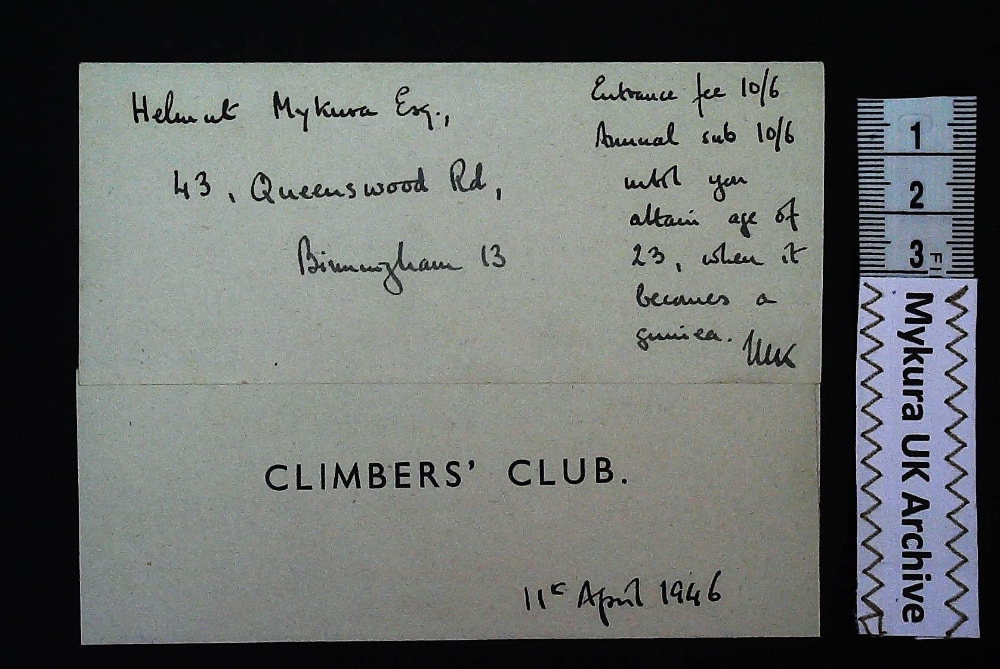
Helmut lived at home and received a university grant from the charity of a Birmingham businessman, the Foyle Trust. Helmut noted his first grant of £20 from the Foyle Trust in September 1944. Later in 1945 he received £15 per term until year two when he got £10 per term. It seems his parents may have been subsidising him with five shillings ‘pocket money’ per week. In his first term Helmut’s costs included ‘Physics Lab Note Books, (6/6 ie six shillings and six pence) a ’Slide Rule,’ (6/4 ie six shillings and four pence) ‘Three Speed Cog Wheel’ (£1/1/3 ie one pound one shilling and three pence) ‘Fountain Pen Repair, (1/4) ‘For Whom the Bell Tolls,’ (10 pence) and snooker. (6 pence) During his first year Helmut’s income included ‘Fire Watching Money.’ His two biggest single items of income apart from the grant were ‘Post Office Pay’ of £5/11/2 on the 25th December 1944 and ‘Farming Pay’ on 25th August 1945
Later Helmut was involved in various societies, such as the Climbers’ Club. He was the secretary of the physics ‘Physical Society.’ Helmut played basketball at university and in 1948 he watched basketball at the Olympics held in London.

Walter Mykura joined the RAF in 1945 aged 19
He was stationed at RAF Cardington near Bedford from June 1945
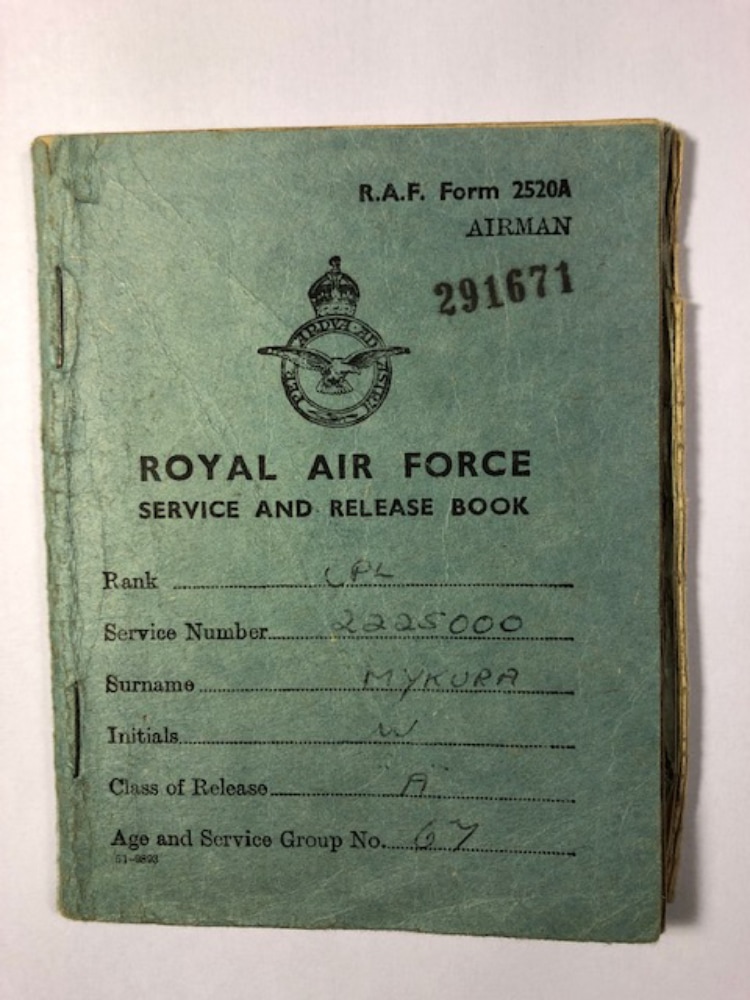
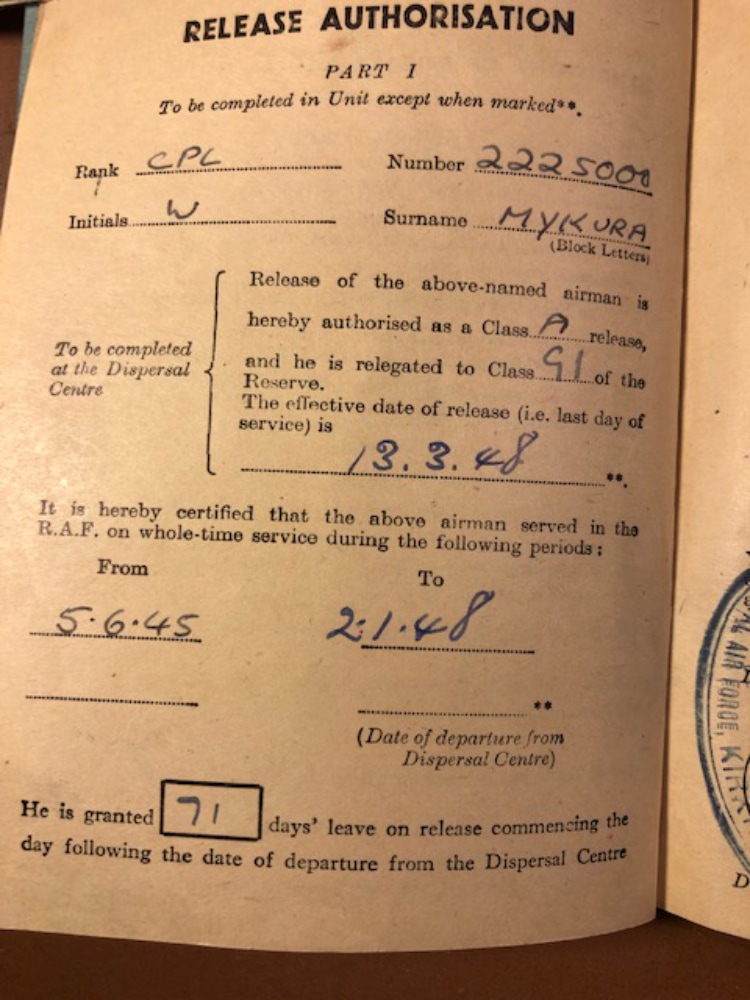
Walter served in the RAF for three years until 1948. He was stationed for some time in Gibralter. Walter Mykura acquired naturalisation (Citizenship) of the UK in 1947 while he was in the RAF. His naturalisation certificate is No. AZ 32725 dated 6th October 1947. Two images show his RAF book. One image shows Walter (left) in RAF uniform in 1945 with his parents and siblings.

Walter Mykura started at Birmingham University in 1948 studying geology.

As well as geological field-work, Walter liked climbing; as a mountain specialist he is is pictured with an ice-axe in the Birmingham University Lapworth Geological Society photograph. The Lapworth Museum of Geology Archive at Birmingham University has examples of Walter’s student hand-drawn and hand-coloured geological maps.
Post-war shortages and rationing
Helmut Mykura’s clothing ration book for 1947 shows rationing continued after the war.

A Shopping Expedition
Franziska Mykura later described in a hand-written, undated essay for her English lessons titled ‘A Shopping Expedition’ how she managed in a time of shortage to buy a carpet after the war. This English homework has been corrected by the teacher in red ink.
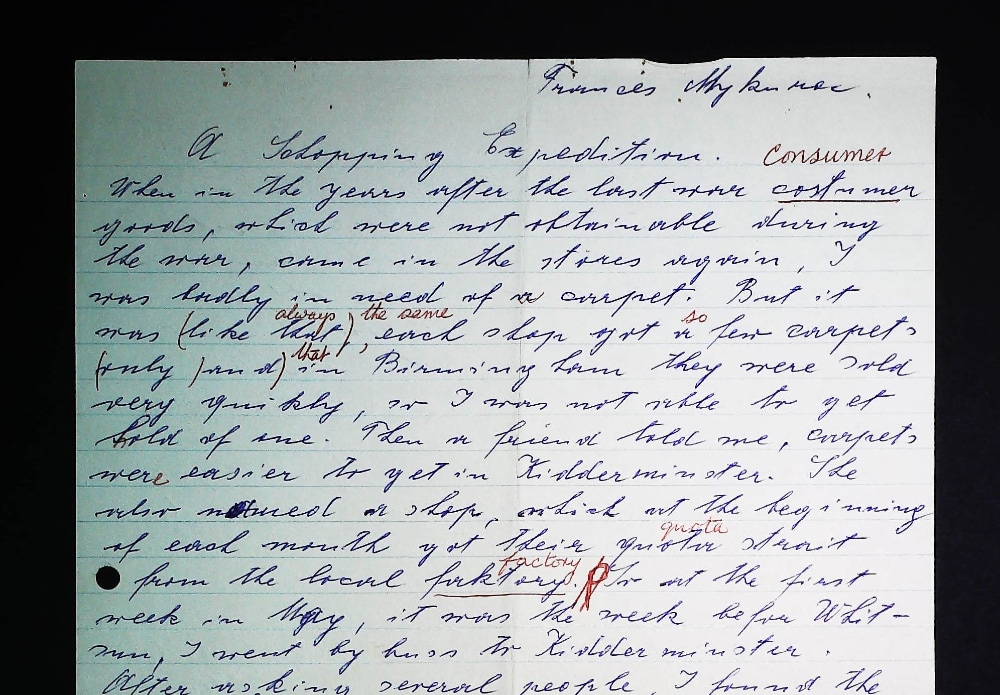
“When in the years after the last war consumer goods, which were not obtainable during the war, came in the stores again, I was badly in need of a carpet. But it was always the same, each shop got a few carpets only and in Birmingham they were sold very quickly, so I was not able to get hold of one. Then a friend told me carpets were easier to get in Kidderminster. She also mentioned a shop which at the beginning of each month got their quota straight from the local factory.
On the first week of May, it was the week before Whitsun, I went by bus to Kidderminster. After asking several people, I found the shop alright and in the shop window a fine carpet was laid out. I was lucky, they just had got their quota and I was able to choose from different qualities and patterns. It was a lovely green carpet with an all over modern pattern, which I liked best. But the price was £3 – more than the money I had brought with me. I really wanted the carpet before Whitsun. The shop assistant told me they would send it as soon as they received the necessary £3.
So back home I bought a postal order at once. But, oh! I had to write a letter as well. Now when I came to England I did not know a word of the language and having learnt my bit of English by picking up word by word, can anyone imagine how difficult it was for me to write a simple letter. With the help of the dictionary I did it and off went the necessary money. On Saturday morning the well-packed carpet was delivered by railway. As we opened it, it was not the one I had chosen with the modern pattern, but one in the same colour and quality with a more old-fashioned pattern, with a border all round. But as this one was also one foot bigger than the one I ordered, what else could I do but keep it?
That carpet looked lovely in our living room and oh! the pleasure it gave me. After starting a new home in England again, a very hard start with second-hand furniture and an old carpet, the room simply looked wonderful to me. My green carpet is worn out quite a bit by now, and I shall have to buy another one soon. But I think, never shall a carpet give me so much joy, as this first one.”
UK naturalisation (citizenship)
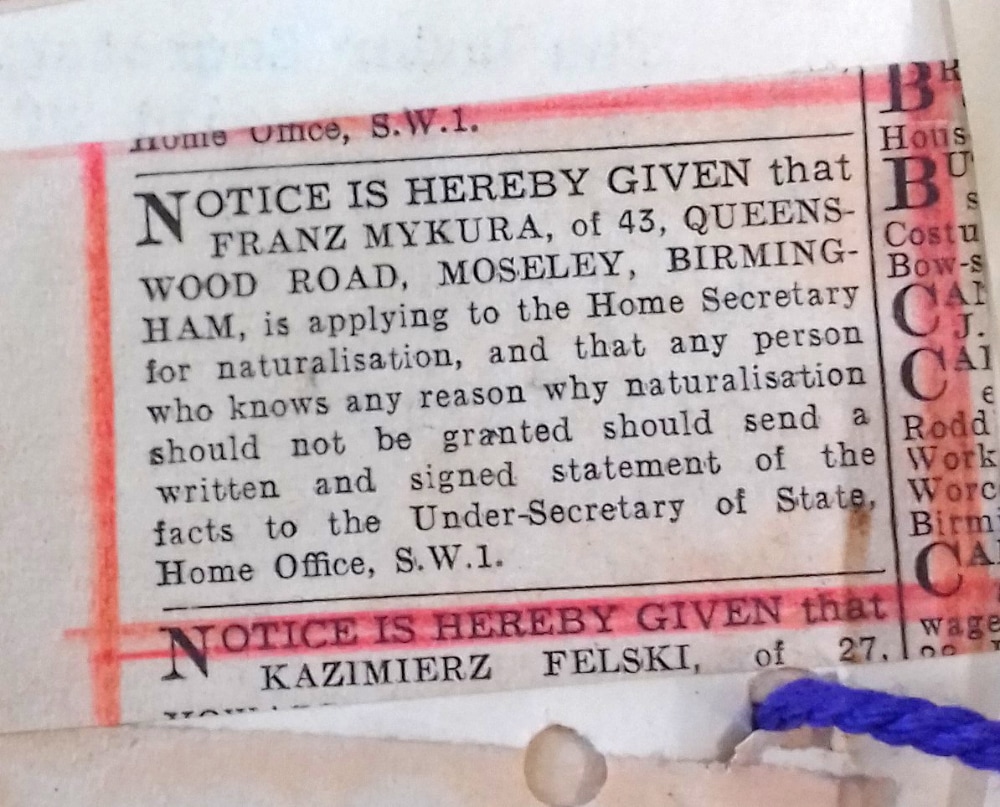
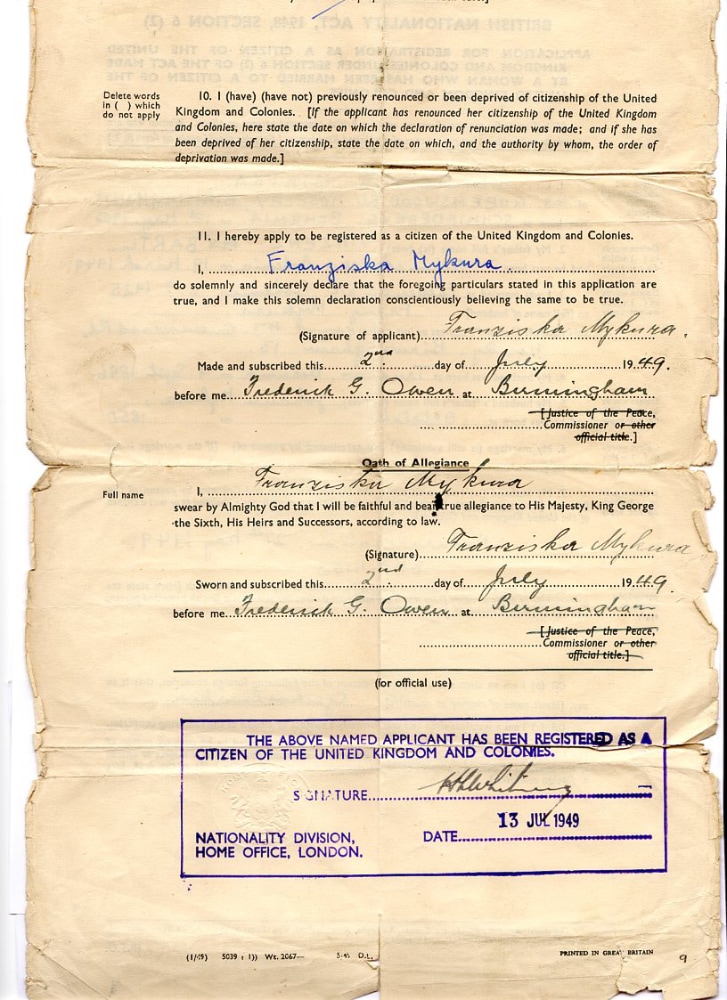
Franz and Franziska Mykura applied for citizenship after their sons had been granted it.
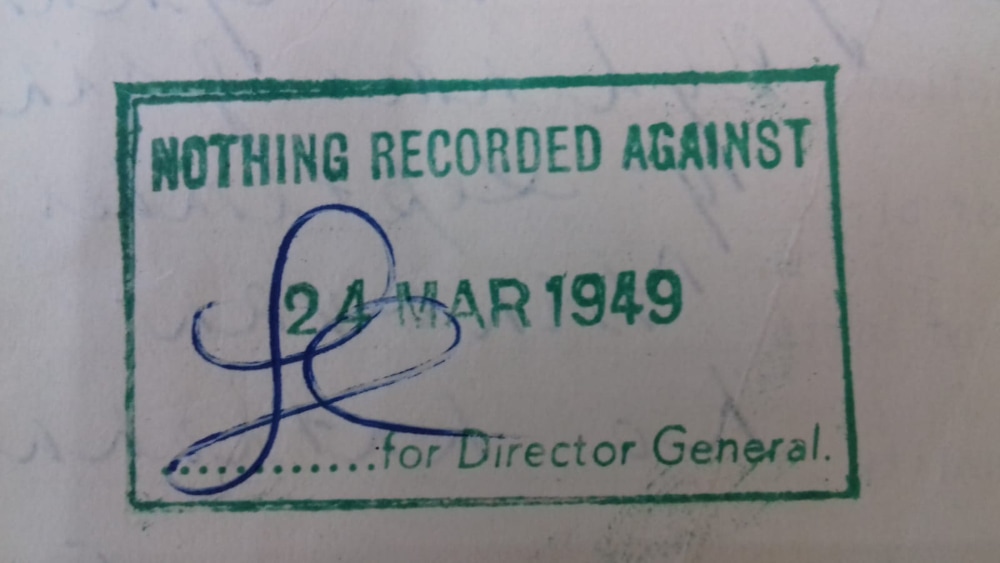
Nothing Against’ was stamped on Franz’s file. After ten years of being stateless, Franz was granted citizenship in May 1949 and Franziska in July 1949. Their applications and correspondence with official bodies such as the police are in Home Office files at the UK National Archive, including the newspaper cutting ‘ Notice is hereby given …’
Walter Mykura and Helmut Mykura had successfully applied, at the age of 21, for UK naturalisation (citizenship).
The Mykura family are settled in the UK
Ten years after arriving in the UK the two elder sons had attended university while the youngest child, Eleanor was at school.
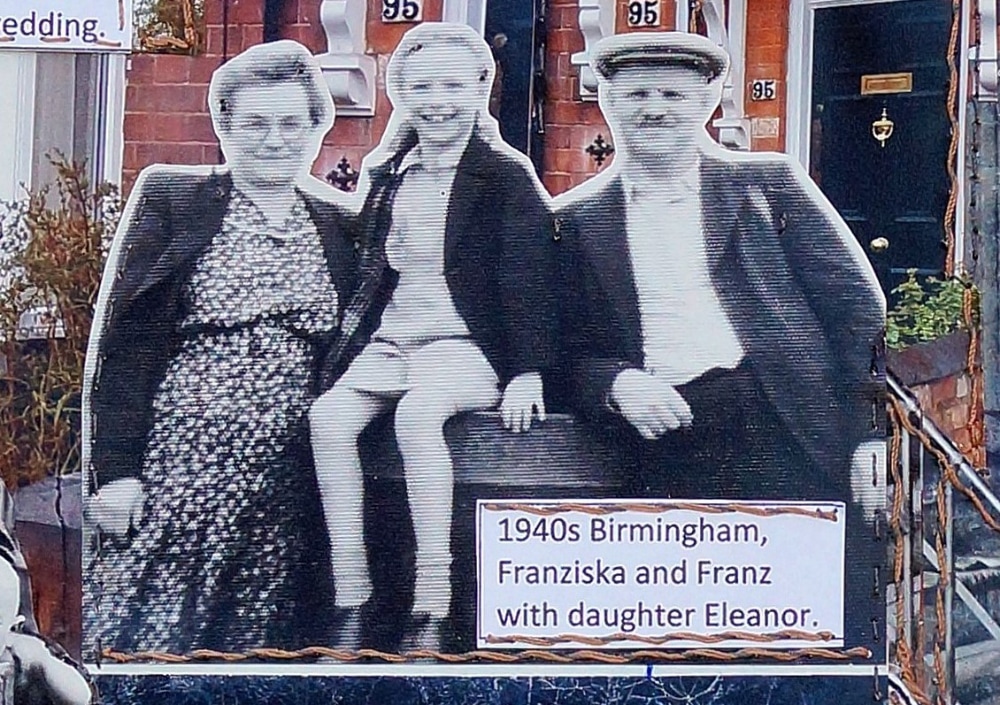
Franz and Franziska Mykura lived with their daughter Eleanor. Since 1940 the family had rented the same rooms on the first floor in a shared house in Birmingham at Queenswood Road at a cost of £1 a week. This is where Franz and Franziska brought up their third child Eleanor Mykura, who was born in 1941. The rooms were cramped and noisy with several families in the house. There was a bath in the kitchen. Czech families lived on other floors, which allowed for mutual support. Eleanor went to Dennis Road primary school and later to Kings Norton Grammar School for Girls. Eleanor spoke German as her first language and did not learn English till she went to primary school.
By 1949 Franz Mykura, aged fifty-three, who had done his apprenticeship in a metal working factory thirty-five years earlier in Czechoslovakia, was earning £8 a week as a skilled metal-worker. Franz worked at the HAGCO Birmingham factory until he retired. His older son, Walter Mykura was in the RAF until 1948, then was a geology student at Birmingham University. His younger son, Helmut Mykura was living in London and working at the British Iron and Steel Research Association.